15-Minute Skillet Butter Chicken (The Rotisserie Chicken Shortcut)
A 15-minute weeknight butter chicken shortcut using shredded rotisserie chicken, canned tomato puree, butter, and cream. Balanced with Kashmiri chili and aromatic fenugreek leaves.
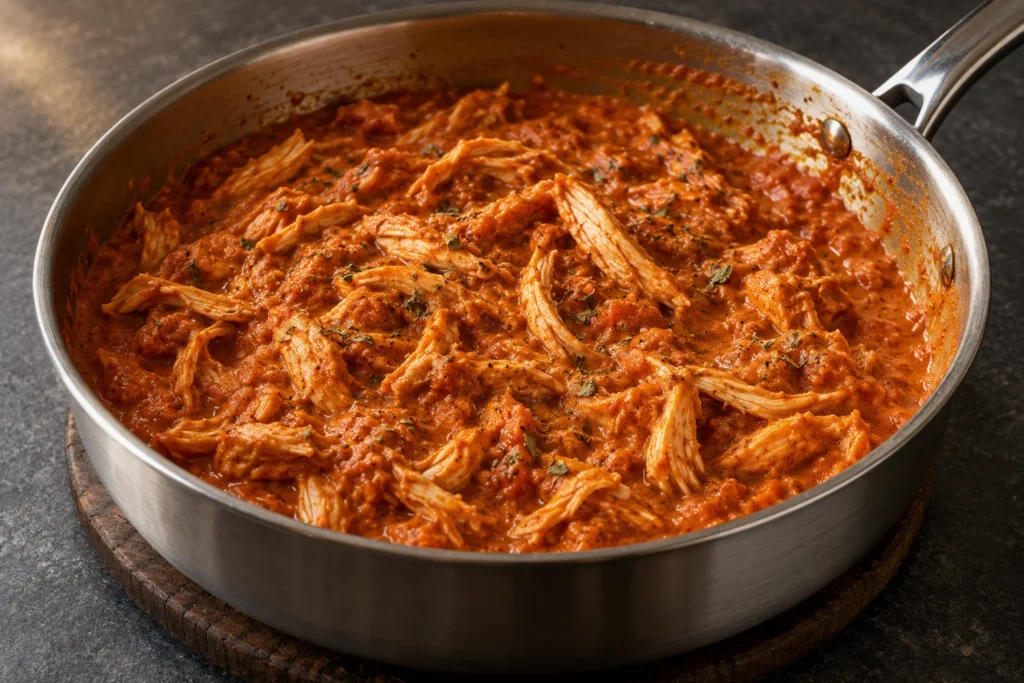
Image note: Food images on this page are AI-assisted illustrations unless a caption explicitly identifies original photography. They do not document a cooked or tested result.
Traditional butter chicken (Murgh Makhani) is one of the world’s great comfort foods, but making it from scratch on a Tuesday night is a multi-hour project.
Authentic restaurant preparation demands a two-stage process: first marinating boneless chicken in spiced yogurt for hours, grilling it over intense heat until blistered, and then simmering a labor-intensive sauce made from fresh tomatoes and soaked cashews strained through cheesecloth to remove every seed and skin.
If you don’t have three hours on a weeknight, you don’t have to settle for bland jarred simmer sauce.
By starting with a juicy supermarket rotisserie chicken and using a smart American pantry technique, you can build a rich, velvety butter chicken sauce in a single skillet in just 15 minutes. The sauce delivers genuine restaurant depth: dairy sweetness from real butter, a mild ruby glow from Kashmiri chili, warming cardamom, and the irreplaceable herbal aroma of dried fenugreek leaves (kasuri methi).
The 30-Second Decision Rule: Why Rotisserie Chicken Works
| Cooking Goal | Traditional From-Scratch | The 15-Minute Rotisserie Shortcut |
|---|---|---|
| Total Time | 2 to 4 hours (including marinating) | 15 to 20 minutes total |
| Pans to Wash | 3 (marinade bowl, grill/broiler pan, sauce skillet) | 1 (single 12-inch skillet) |
| Texture Risk | Can dry out if chicken breast is over-broiled | Tender and juicy (chicken is only warmed in sauce) |
| Flavor Profile | Smoky, charred tandoori notes | Rich, velvety, buttery comfort |
| Best For | Weekend leisure cooking & dinner parties | Busy weeknights, meal prep, and family dinners |
Commercial rotisserie chickens (especially from Costco, Walmart, or supermarket delis) are aggressively brined and seasoned. As noted in our Costco Rotisserie Chicken Strategy, do not add the full amount of salt up front. Start with just 1/4 teaspoon when simmering the tomato base, and only add more at the very end after the chicken has warmed through and you have tasted the finished gravy.
The Secret: How to Keep Rotisserie Chicken Juicy
The number one mistake home cooks make when adding pre-cooked rotisserie chicken to curry is dumping shredded chicken into the skillet right at the start and simmering it for 15 minutes.
Because cooked chicken breast has already lost its unbound moisture during roasting, simmering it in an acidic tomato sauce causes muscle fibers to contract into dry, stringy chalk. Follow these two rules:
- Dark vs. White Meat Choice:
- Dark Meat (Thighs & Legs): Higher natural fat and collagen; highly forgiving and absorbs sauce flavor effortlessly.
- White Meat (Breast): Leaner and milder; strictly requires the 3-minute warm-through to stay tender.
- The 50/50 Blend (Recommended): Tear dark meat into shreds and dice breast meat into 1-inch cubes for the best balance of rich flavor and hearty texture.
- The 3-Minute Finish: Build, simmer, and emulsify the tomato-butter sauce completely first. Fold in the cooked chicken only in the final 3 minutes over low heat. The chicken absorbs the warm sauce and reaches eating temperature without losing moisture.
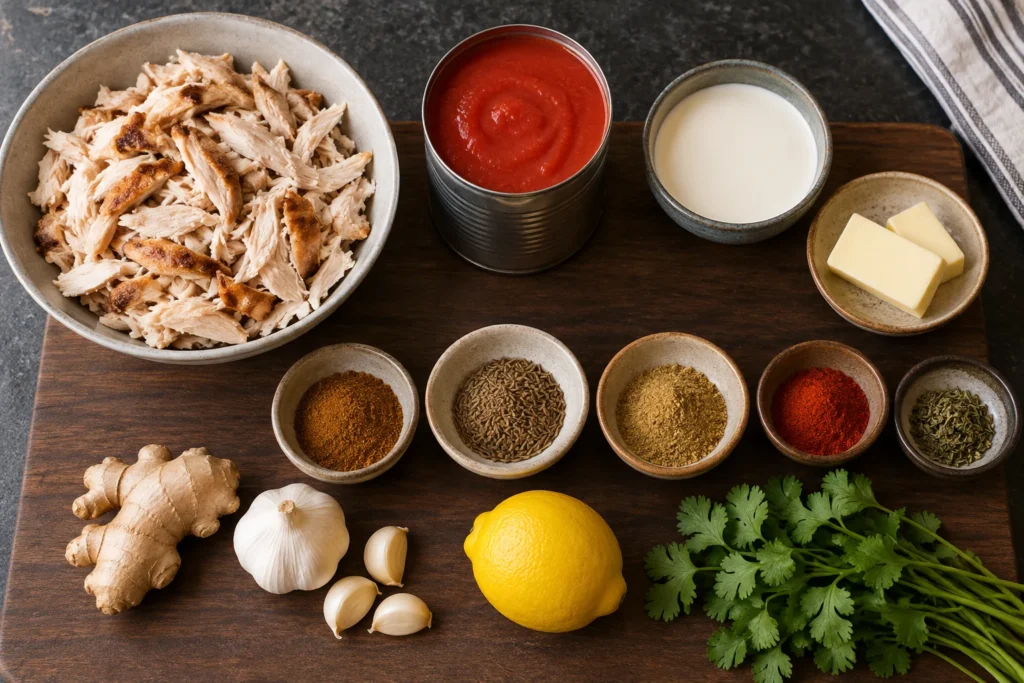
Key Ingredients & American Pantry Swaps
- Rotisserie Chicken (3 to 4 cups): One standard 3-lb rotisserie chicken yields about 4 cups of meat. Discard the skin and bones (save bones in your freezer for chicken stock).
- Canned Tomato Puree or Passata (14 oz can): Avoid diced or crushed canned tomatoes, which leave watery pulp. Smooth tomato puree or Italian strained passata gives you the silky, seedless texture of restaurant makhani without needing a blender.
- Unsalted Butter (3 tablespoons, divided): 1 tablespoon to sauté the ginger-garlic base, and 2 cold tablespoons swirled in off the burner at the very end for a glossy, emulsified restaurant finish.
- Heavy Whipping Cream (1/3 cup): Mellows tomato acidity and creates the signature pale orange-red hue. For a lighter dairy-free option, use full-fat canned coconut milk or plain cashew cream.
- Ginger-Garlic Paste (1 tablespoon): Equal parts fresh minced ginger and garlic, or standard supermarket tube paste.
- Kashmiri Chili Powder (1 teaspoon): As detailed in our Interactive Indian Spice Level & Heat Translator, Kashmiri chili provides a brilliant ruby-red glow with gentle, warm fruitiness (under 1,500 SHU) and zero harsh sting. Pantry swap: 3/4 tsp sweet paprika + 1/4 tsp cayenne.
- Garam Masala (1 teaspoon): A warm, aromatic blend of cinnamon, cloves, cardamom, and black pepper.
- Ground Cumin & Coriander (1/2 teaspoon each): Adds an earthy, savory base.
- Dried Fenugreek Leaves / Kasuri Methi (1 teaspoon, crushed): The non-negotiable secret. Dried fenugreek leaves are what give butter chicken its distinctive restaurant aroma—herbal, savory, and slightly maple-like. Pantry Practicality: Find it once, keep it forever. You can pick up an inexpensive $3–$4 box at any local Indian grocery or online via Amazon. Store it in a sealed jar or your freezer, and it will stay fresh for years across dozens of curry dinners. If you cannot source it tonight, omit it rather than using Italian dried herbs; or as an imperfect weeknight pinch-hit, use a tiny pinch of ground celery seed with a drop of maple syrup for a subtle herbal-sweet undertone.
- Honey or Brown Sugar (1 teaspoon): Authentic butter chicken has a delicate, subtle sweetness that balances tomato tang (see our Butter Chicken vs Tikka Masala Showdown).
Step-by-Step Instructions
Step 1: Shred the Chicken (2 Minutes)
Remove the meat from your rotisserie chicken. Shred the thigh and drumstick meat into bite-sized pieces with your fingers; cut the breast meat into 1-inch cubes. You should have roughly 3 to 4 packed cups. Set aside on a plate.
Step 2: Sauté the Aromatics (2 Minutes)
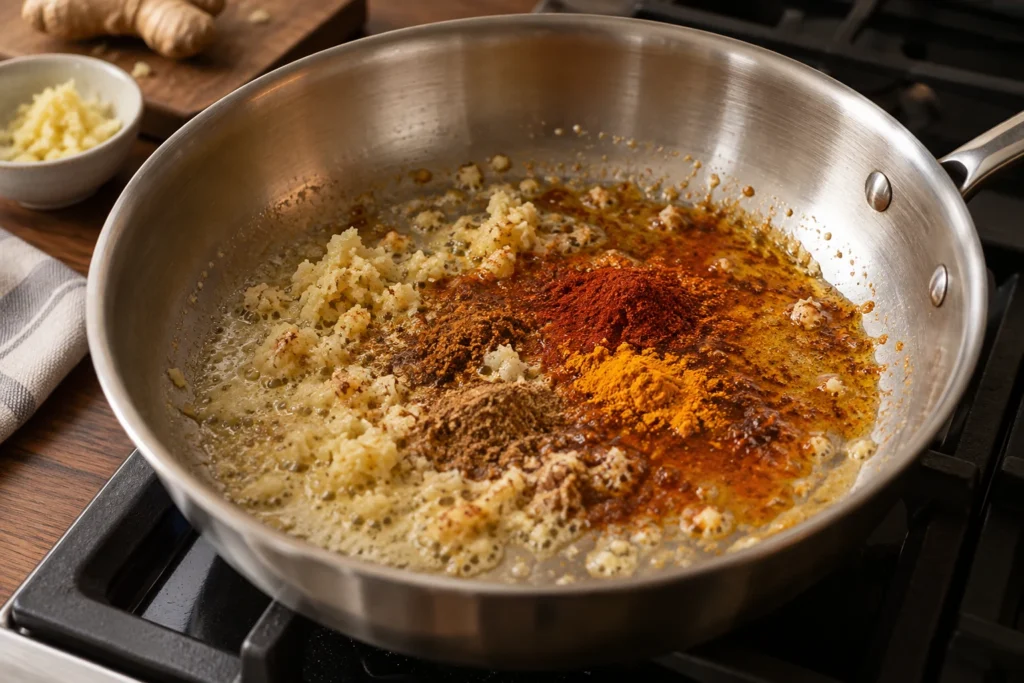
Melt 1 tablespoon of butter with 1 teaspoon of neutral oil (or ghee) in a wide 12-inch skillet over medium heat. The oil raises the smoke point and keeps butter solids from scorching. Add 1 tablespoon of ginger-garlic paste and stir for 45 to 60 seconds until fragrant and lightly golden, being careful not to brown the garlic.
Step 3: Bloom Spices & Simmer Tomato Base (5 Minutes)
Turn heat to medium-low. Add 1 tsp Kashmiri chili powder, 1 tsp garam masala, 1/2 tsp ground cumin, 1/2 tsp ground coriander, and 1/4 tsp salt. Stir in the warm fat for 20 seconds to bloom the fat-soluble spices.
Immediately add 1 can (14 oz) of tomato puree and 1 tbsp tomato paste. Stir thoroughly. Bring the sauce to a gentle simmer, cover loosely with a splatter screen or lid, and simmer over medium-low heat for 4 to 5 minutes until the sauce darkens slightly and you see small droplets of red spiced butter glistening along the skillet edges.
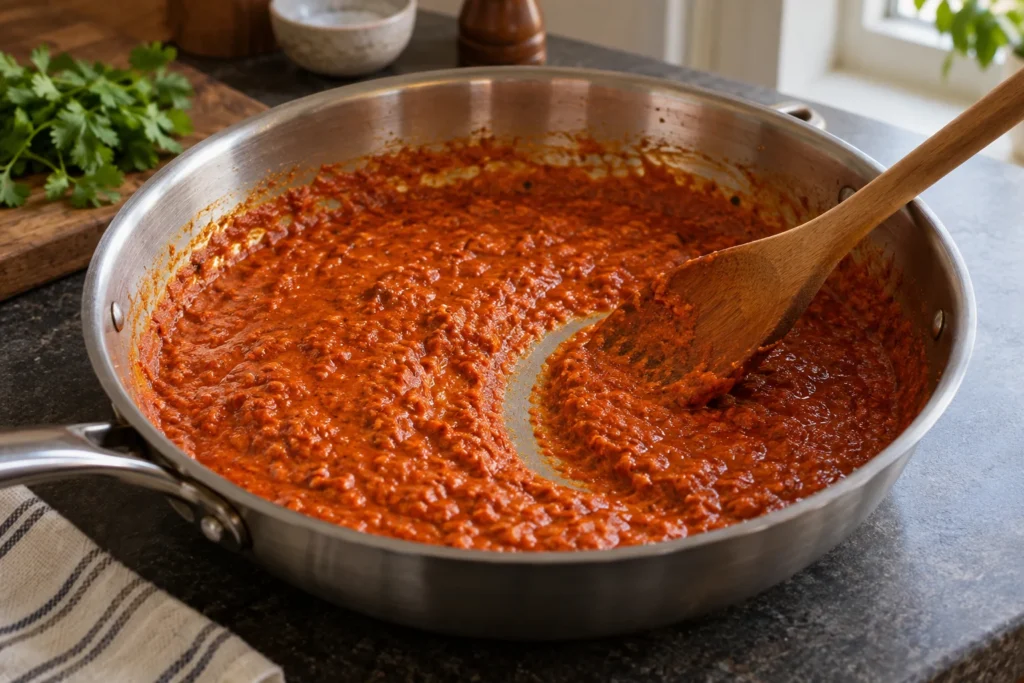
Step 4: Finish the Sauce with Cream & Fenugreek (2 Minutes)
Reduce heat to low. Stir in 1/3 cup of heavy whipping cream and 1 teaspoon of honey.
Take 1 teaspoon of dried fenugreek leaves (kasuri methi) in your palm, rub your hands together to crush the leaves directly into the skillet, and stir them in. Watch the sauce transform into a velvety orange-red gravy.
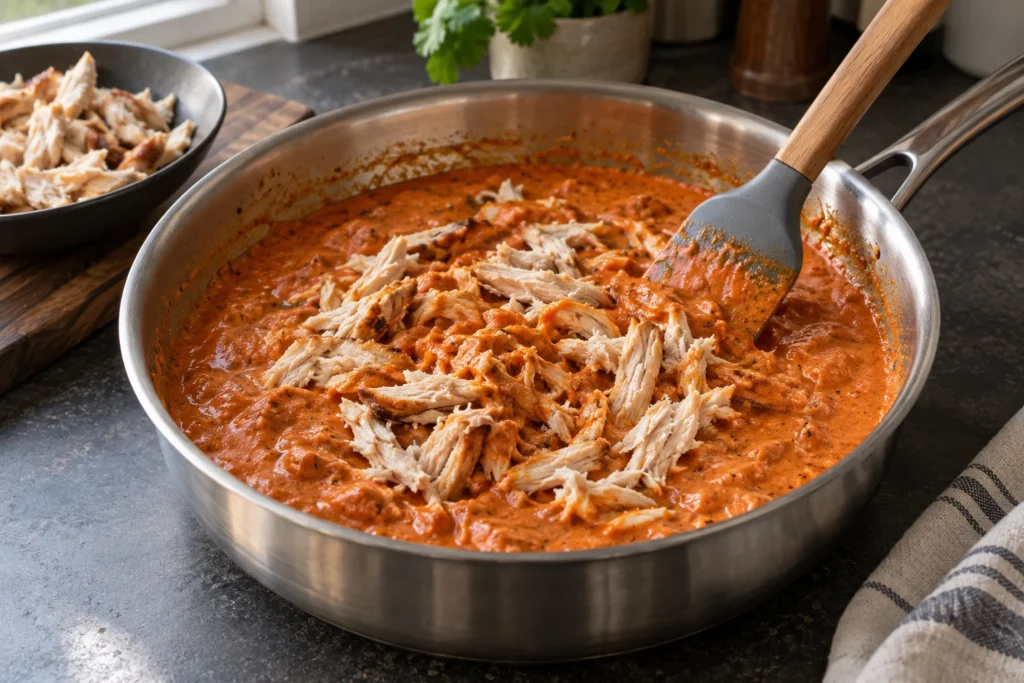
Step 5: Warm Chicken & Emulsify the Butter (3 Minutes)
Fold the shredded rotisserie chicken into the gently simmering sauce until evenly coated. Cook on low heat undisturbed for 3 minutes, just until the chicken is hot to the center.
Taste the gravy and adjust salt only if needed. Turn off the burner. Add the remaining 2 tablespoons of cold butter, cut into small cubes. Swirl or gently stir until fully melted and glossy.
Garnish with a drizzle of heavy cream and fresh cilantro leaves. Serve immediately.
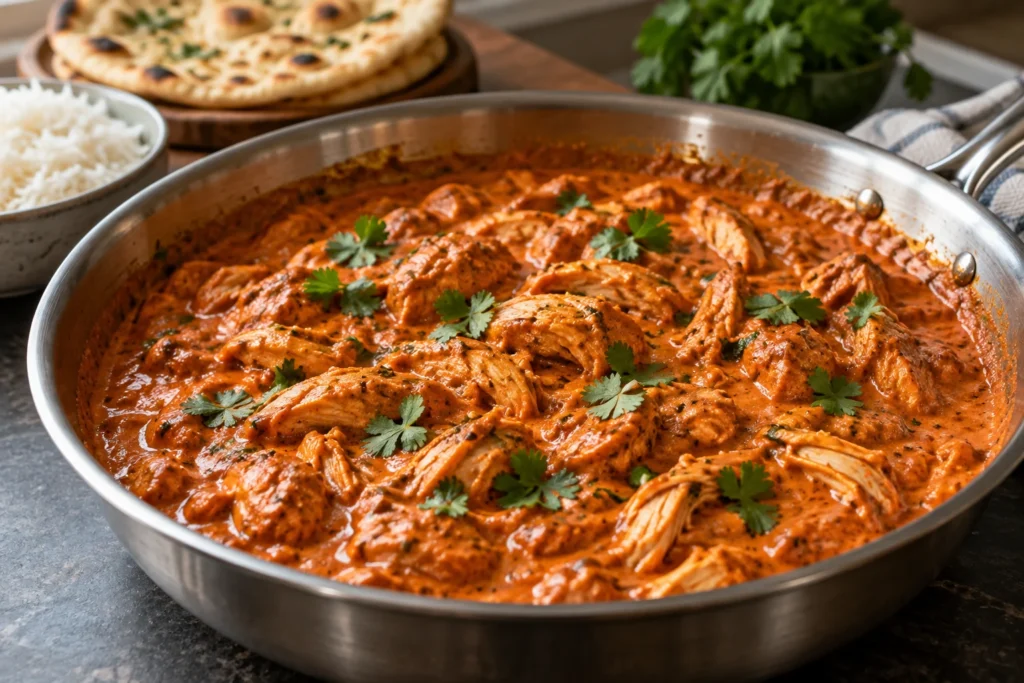
What to Serve with 15-Minute Butter Chicken
Butter chicken is built around a velvety gravy that begs for good starch vehicles:
- Warm, Blistered Naan: Pair this with top-ranked Store-Bought Frozen Tandoori Garlic Naan (like Trader Joe’s or Deep Indian Kitchen), toasted over an open gas burner for 30 seconds for real tandoor char.
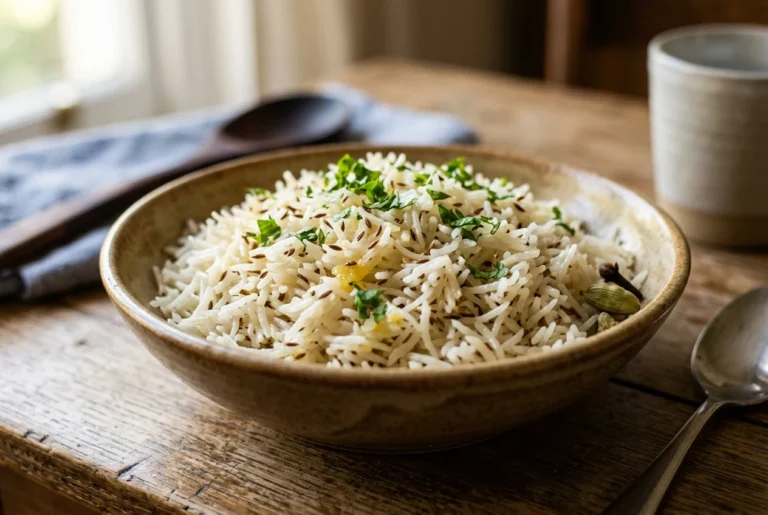
- Fluffy, Separate Basmati Rice: Serve over long, fragrant needle grains of Aged Basmati Rice (such as Royal Chef’s Secret or Costco’s 20-lb Royal) cooked using our simple stovetop absorption method.
- Cooling Cucumber Raita: A quick side of cold whole-milk yogurt, grated cucumber, and cumin provides an easy textural contrast to the buttery gravy (see our Menu Decoder entry on Raita).
Common Mistakes & Troubleshooting
- The sauce tastes too sour: Canned tomato purees vary in acidity. If the gravy tastes sharp, stir in an extra 1/2 teaspoon of honey or brown sugar and a splash of cream.
- The sauce is too thick: If the puree reduced too fast, stir in 2 to 4 tablespoons of warm water or low-sodium chicken broth to restore a smooth, spoonable consistency before adding the chicken.
- The chicken tastes dry: Remember the core rule: never boil pre-cooked chicken. Rotisserie chicken only needs 3 minutes of gentle warming in the finished gravy.
- The sauce separated or looks oily: This occurs if heavy cream is boiled violently over high heat. Always reduce heat to low before adding cream, and melt the finishing butter off the burner.
Frequently Asked Questions
Can I make this with raw chicken instead?
Yes. Cut 1 lb of boneless chicken thighs or breasts into 1-inch pieces, season with 1/2 tsp salt and 1/2 tsp Kashmiri chili, and sear in 1 tbsp ghee over medium-high heat for 5 to 6 minutes until browned. Remove the chicken, prepare the sauce in the same skillet, and simmer the chicken in the sauce for 6 to 8 minutes until cooked through (165°F).
How long does leftover rotisserie butter chicken keep?
Store in an airtight container in the refrigerator for up to 3 to 4 days. Because the spices continue infusing into the gravy overnight, butter chicken often tastes even better the next day. Reheat gently in a small saucepan over medium-low heat with a splash of water or cream.
Can I freeze butter chicken?
Yes. Cool completely, transfer to a freezer-safe container with air removed, and freeze for up to 3 months. Thaw overnight in the refrigerator and warm gently on the stove over low heat. If the sauce looks slightly grainy after thawing, whisking in 1 tablespoon of fresh cream restores the emulsion.
Basmati Rice Brand Ranking →
See which supermarket basmati brands deliver real restaurant needle length.
Store-Bought Naan Ranking →
Find out why the freezer aisle beats the bakery shelf every single time.
The Recipe Card
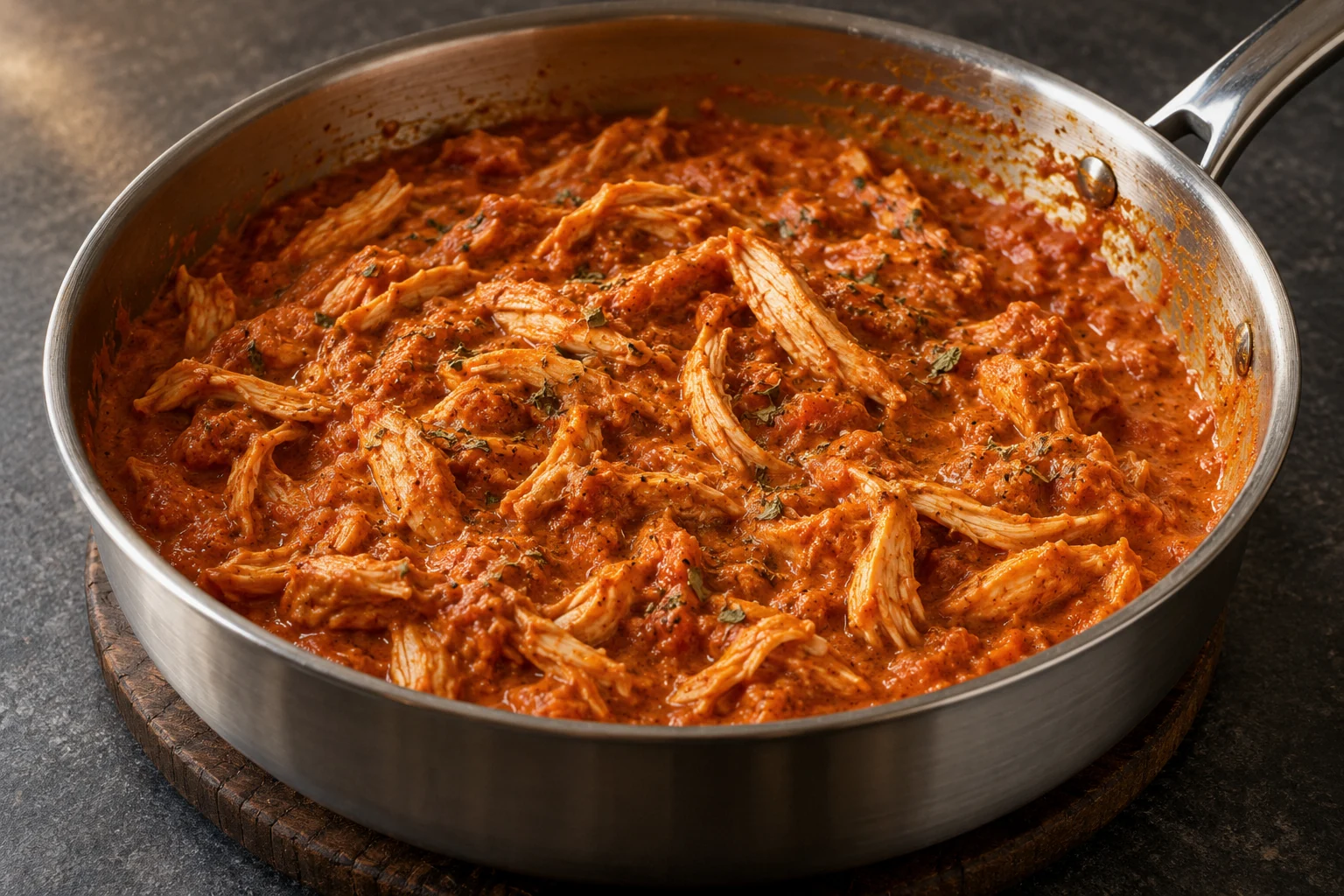
15-Minute Skillet Butter Chicken (The Rotisserie Chicken Shortcut)
Ingredients
Method
- Melt 1 tablespoon butter with the oil in a 12-inch skillet over medium heat. Add the ginger and garlic; cook, stirring, for 30 seconds without browning.
- Add the garam masala, cumin, coriander, and Kashmiri chili powder. Stir constantly for 20 to 30 seconds, just until aromatic.
- Pour in the tomato puree and water. Bring to a steady simmer and cook uncovered for 6 to 7 minutes, stirring often, until the sauce darkens slightly and a spoon drawn across the pan leaves a brief trail.
- Reduce the heat to low. Stir in the cream, crushed fenugreek if using, remaining tablespoon butter, and 1/4 teaspoon salt.
- Fold in the shredded chicken. Warm gently for 3 to 4 minutes, stirring once or twice, until the thickest pieces reach 165°F. Do not let the sauce boil hard.
- Taste before adding more salt. If the tomato tastes flat rather than bright, stir in the lemon juice. Finish with cilantro and serve immediately.
Notes
- Measure the chicken loosely; tightly packed cups make the sauce dry.
- Keep extra salt off the stove until the rotisserie chicken has warmed in the sauce.
- If the sauce tightens while the chicken heats, add water 1 tablespoon at a time.
- Use a thermometer on a thick piece instead of extending the simmer by guesswork.
Development note: This recipe was developed from culinary research and established cooking methods. Unless this page explicitly says otherwise, TrendyTadka has not physically cooked or tested it; times and results should be treated as estimates. Read our complete methodology.
Keep Cooking