15-Minute Canned Black Bean Dal Makhani
Canned black beans become a fast, creamy, dal-makhani-inspired dinner with tomato, butter, warm spices, and a little cream.
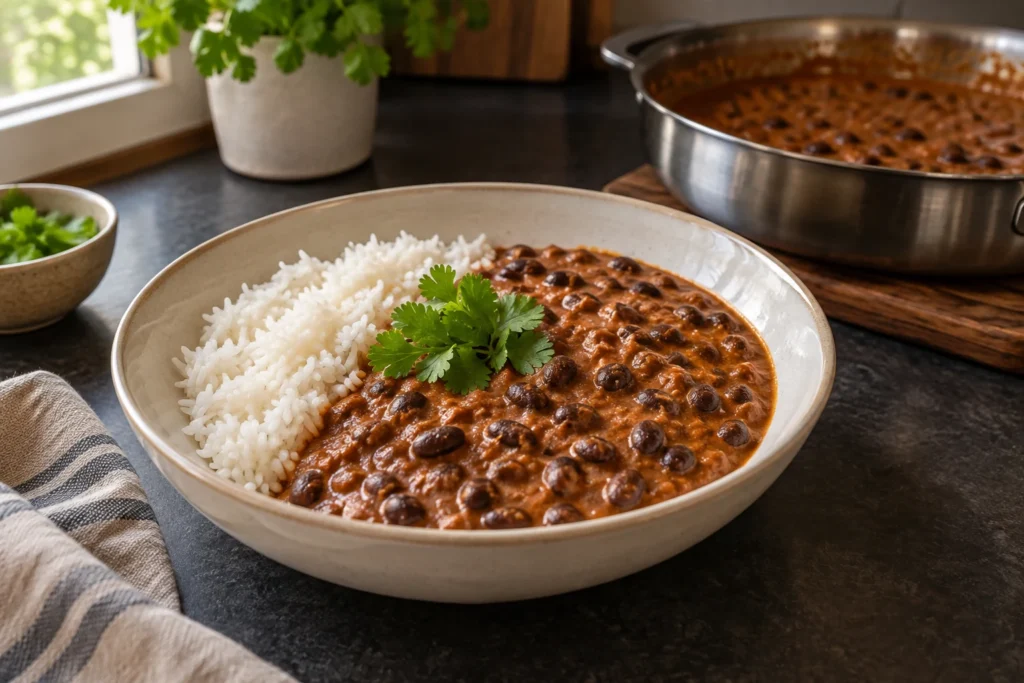
TL;DR: Canned black bean dal makhani is a fast adaptation, not a substitute that behaves exactly like whole black urad dal. Mash some of the beans, simmer them with tomato and spices, and finish with butter and cream for body in about 15 minutes.
Canned black beans become a fast, creamy, dal-makhani-inspired dinner with tomato, butter, warm spices, and a little cream.
Traditional dal makhani depends on whole black urad dal and a long, slow cook. Canned black beans are a different legume with a different flavor, but their soft texture can make a useful weeknight skillet meal.
The recipe is honest about that trade: gentle mashing creates body, while tomato paste, butter, cream, ginger, and garam masala supply richness without pretending the beans are urad dal.
What Is Canned Black Bean Dal Makhani?
Canned black bean dal makhani is an American-pantry adaptation that borrows the buttery tomato-spice profile of dal makhani while using ready-to-eat black beans.
Why This Recipe Works
- Two cans replace soaking and long simmering.
- Mashing one-third of the beans thickens the sauce without flour.
- Tomato paste concentrates quickly enough for a 15-minute workflow.
- Butter and cream are measured modestly so the beans still lead.
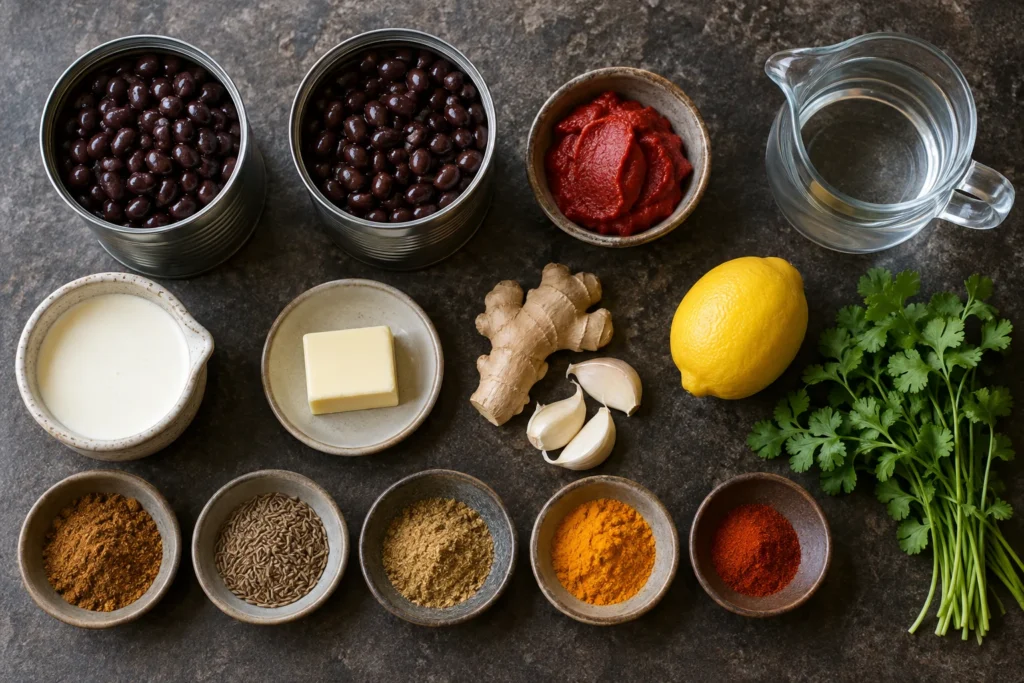
Ingredients That Matter
Canned black beans
Rinse and drain them well; the canning liquid can muddy the sauce and vary in salt.
Tomato paste
A tablespoon provides concentrated tomato flavor without the reduction time of a full can of tomatoes.
Butter and cream
They echo the makhani idea while keeping this clearly an adaptation.
Garam masala
Add most with the spices and a small pinch at the end if more aroma is needed.
Ingredient Swaps
| Swap | What changes |
|---|---|
| Coconut cream | Makes the recipe dairy-free but adds coconut flavor. |
| No cream | Mash more beans and add 2 tablespoons water; the result is less rich. |
| Kidney beans | They move the dish closer to a quick rajma profile, not traditional dal makhani. |
How to Make It
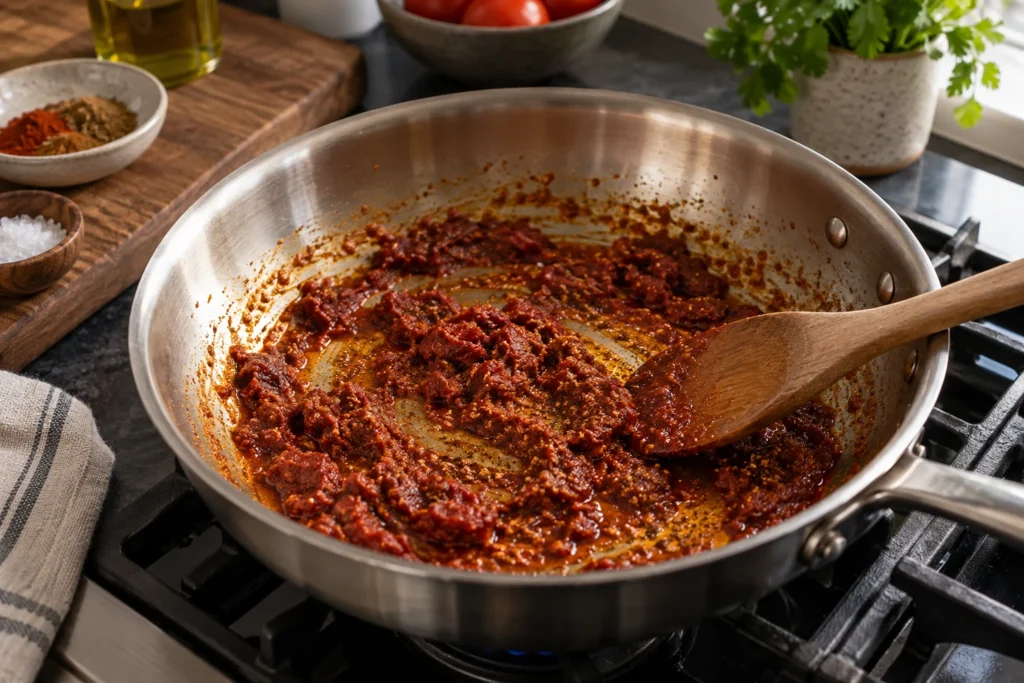
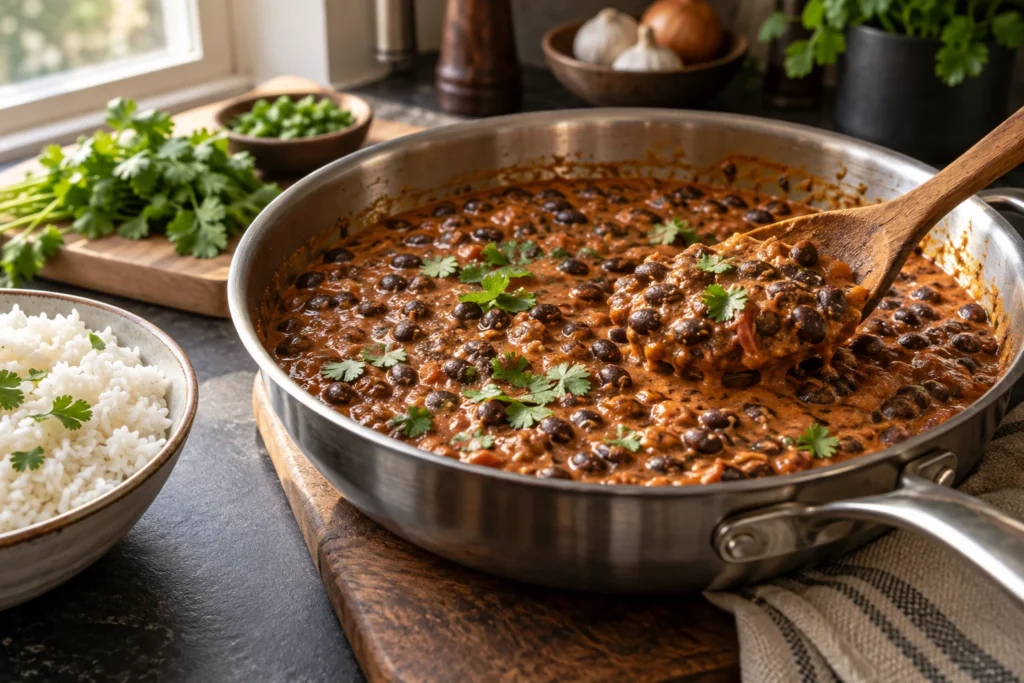
Use a wide pan and tomato paste so the base develops quickly. Blooming the paste with the spices removes its raw edge.
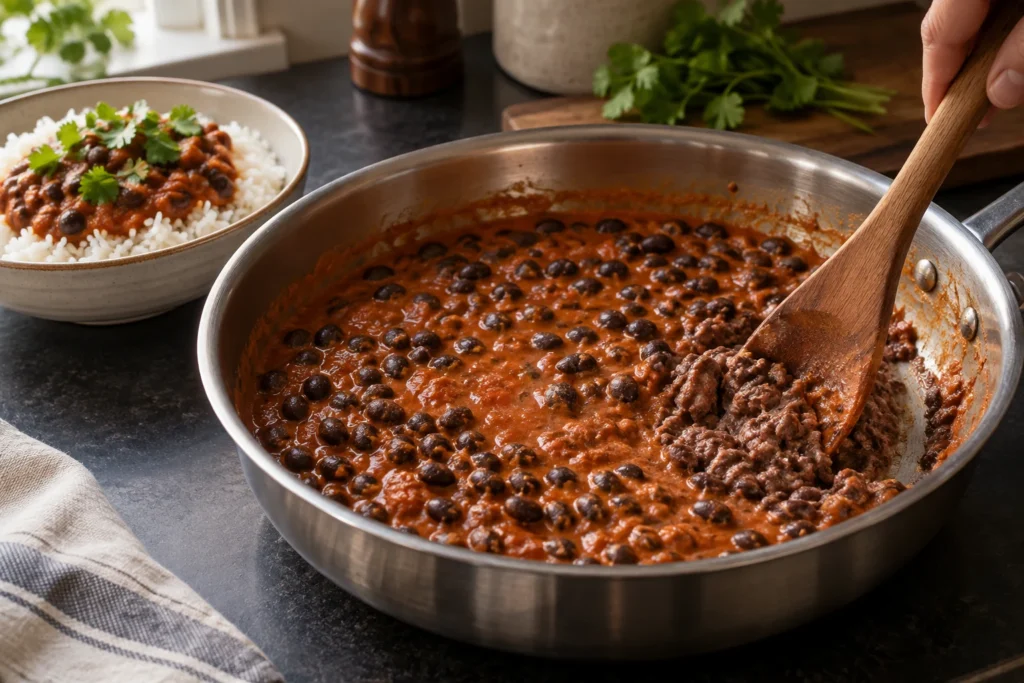
Mash only part of the beans. Whole beans give the dish structure while the mashed portion releases starch and creates a creamy base.
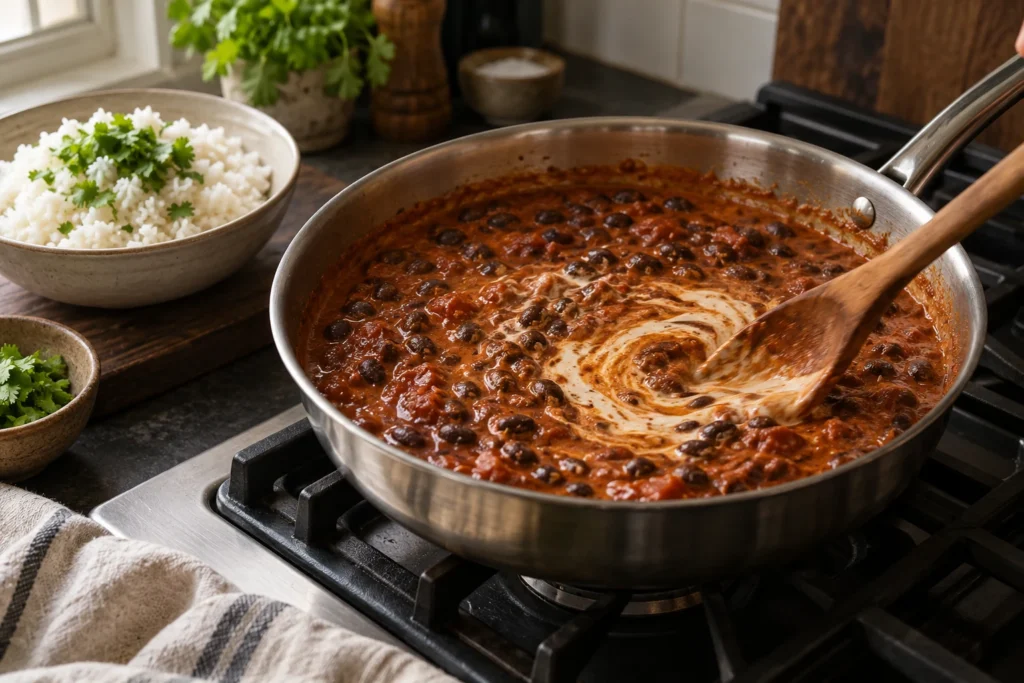
Finish over low heat. A hard boil after cream is added is unnecessary and can make the sauce look grainy.
Success Tips
- Drain the beans thoroughly before they hit the pan.
- Mash gradually; you can always crush more but cannot restore whole beans.
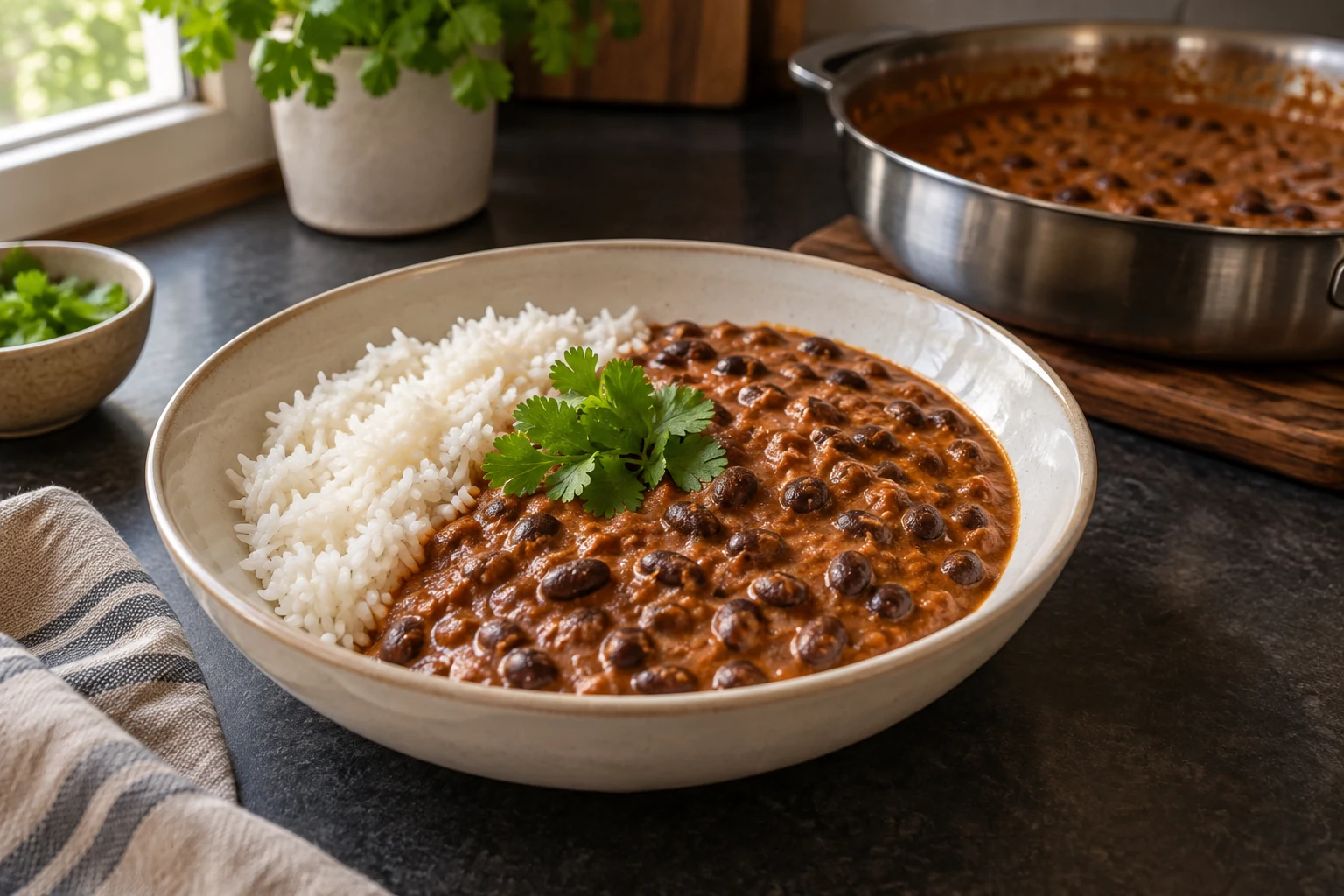
- Keep the final texture loose enough to spoon over rice.
- Add acid after the heat is off so it reads clearly against the fat.
Serving Suggestions
Serve with rice, naan, or toast and a crunchy cucumber salad. For a chickpea-based pantry curry, see canned chickpea chana masala. Explore American Pantry Shortcuts.
Storage and Reheating
Cool and refrigerate within 2 hours for up to 3 to 4 days. The beans thicken as they stand; add water while reheating and bring the center to 165°F. Freeze for up to 2 months for quality, understanding that dairy may look slightly separated after thawing.
Recipe Card
15-Minute Canned Black Bean Dal Makhani
Ingredients
Method
- Heat the oil and 1 tablespoon butter in a wide skillet over medium heat. Add ginger and garlic; cook for 30 seconds.
- Stir in tomato paste, garam masala, cumin, coriander, turmeric, and cayenne. Cook, stirring constantly, for 45 seconds until the paste darkens slightly.
- Add the black beans, water, and 1/2 teaspoon salt. Bring to a simmer.
- Mash roughly one-third of the beans against the side of the skillet. Simmer uncovered for 6 to 7 minutes, stirring often, until thick but spoonable.
- Reduce heat to low and stir in the cream and remaining teaspoon butter. Warm for 1 minute without boiling hard.
- Remove from heat, add lemon juice, taste for salt, and finish with cilantro.
Notes
- Drain the beans thoroughly before they hit the pan.
- Mash gradually; you can always crush more but cannot restore whole beans.
- Keep the final texture loose enough to spoon over rice.
- Add acid after the heat is off so it reads clearly against the fat.
Development note: This recipe was developed from culinary research and established cooking methods. Unless this page explicitly says otherwise, TrendyTadka has not physically cooked or tested it; times and results should be treated as estimates. Read our complete methodology.
Keep Cooking