Instant Pot Creamy Coconut Lentil & Spinach Curry
Rich red lentils, full-fat coconut milk, and tender baby spinach simmer into a 30-minute vegan curry using a smart staged pressure-cooking technique.
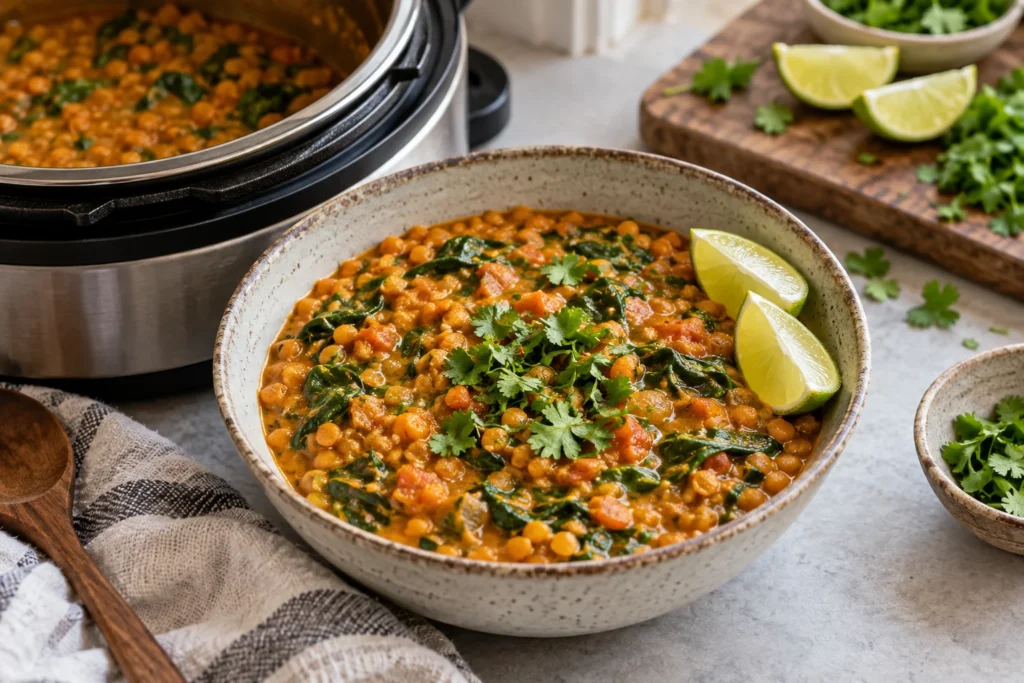
Recipe at a Glance: A 30-minute vegan comfort curry where red lentils cook in broth under pressure, while full-fat coconut milk and fresh baby spinach are stirred in afterward. This staged technique avoids scorched dairy-free milk, prevents pressure curdling, and keeps greens bright.
Creamy coconut curries with lentils and greens are staples of modern plant-based comfort cooking. Yet when home cooks attempt to make them in an electric pressure cooker, two common frustrations arise: the rich coconut milk separates or scorches against the pot's high-heat bottom, and the fresh spinach turns olive-drab and stringy.
The solution is culinary staging. By pressure-cooking only the split red lentils, aromatics, and tomatoes in water first, then folding in full-fat coconut milk and baby spinach after pressure release, the curry attains a luxurious, velvety texture with vibrant green leaves in just 30 minutes.
Key Technique: Staged Coconut & Greens Addition
Why shouldn't you pressure-cook coconut milk and tender greens together?
1. Fat Separation & Thermal Scorching: Canned coconut milk is an oil-in-water emulsion. Subjecting it to 240°F+ high pressure breaks that delicate emulsion, causing oil slicking and curdling. Furthermore, the viscosity of coconut milk easily triggers Instant Pot 'Burn' warnings when direct heat is applied to the base.
2. Chlorophyll Degradation: Spinach leaves contain heat-sensitive chlorophyll pigments. Boiling greens under high pressure destroys their cellular structure and turns them dull brown. Folding raw baby spinach into the steaming curry off-pressure wilts the leaves in roughly 90 seconds, preserving vibrant color, gentle texture, and essential micronutrients.
Ingredients That Matter
Split Red Lentils
Red lentils disintegrate during cooking, serving as a natural thickening agent that gives the curry hearty body without relying on cornstarch or heavy flours.
Full-Fat Canned Coconut Milk
Use canned whole coconut milk (unsweetened) rather than refrigerated coconut beverage cartons. Canned milk provides the richness and body that balances the acidic canned tomatoes.
Baby Spinach
Tender baby spinach requires zero pre-cooking. Added straight from the clamshell or bag into the hot lentil base, the leaves wilt smoothly in under two minutes.
Fresh Lime Juice
Coconut milk curries are inherently rich and sweet. A generous tablespoon of fresh lime juice stirred in at the end cuts through the fat and wakes up the spices.
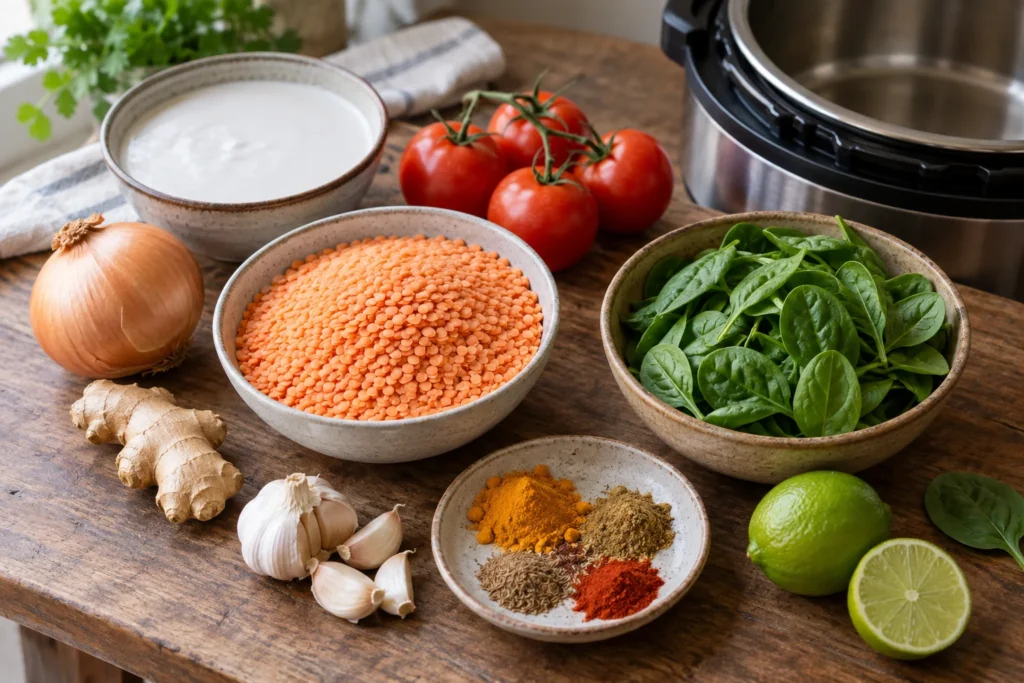
How to Make It
Heat 1 tablespoon of neutral oil on Sauté mode. Cook diced onion for 3 minutes, then stir in grated ginger, garlic, curry powder, and turmeric for 30 seconds until fragrant.
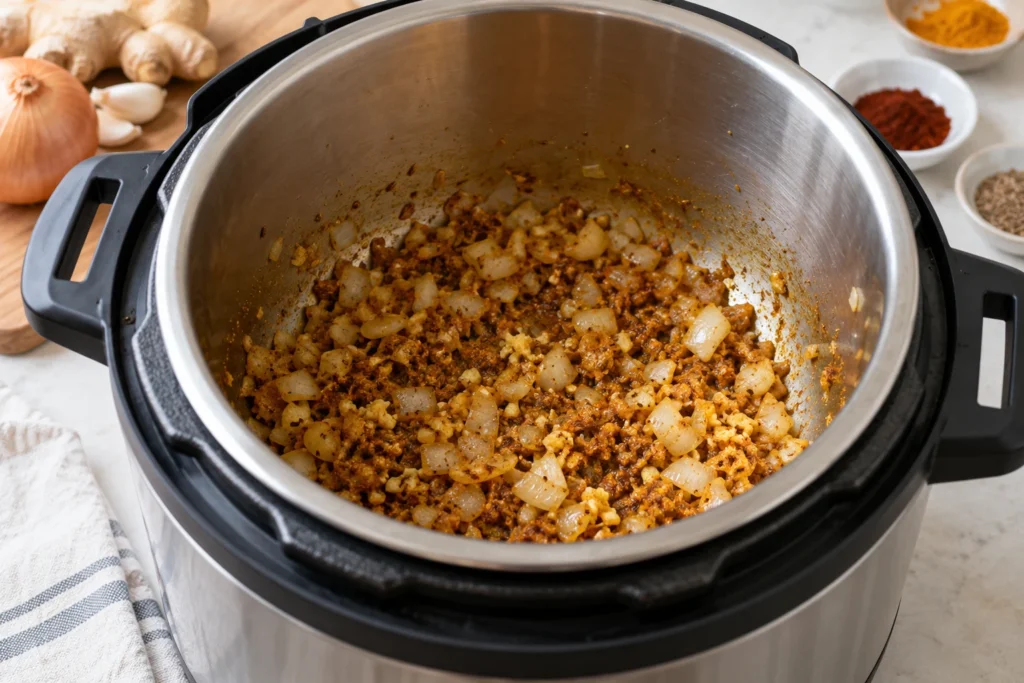
Press Cancel. Pour in 1/2 cup of water and thoroughly deglaze the bottom of the cooker with a spatula. Add the rinsed red lentils and remaining 2 1/2 cups of water; spoon the diced tomatoes on top without stirring.
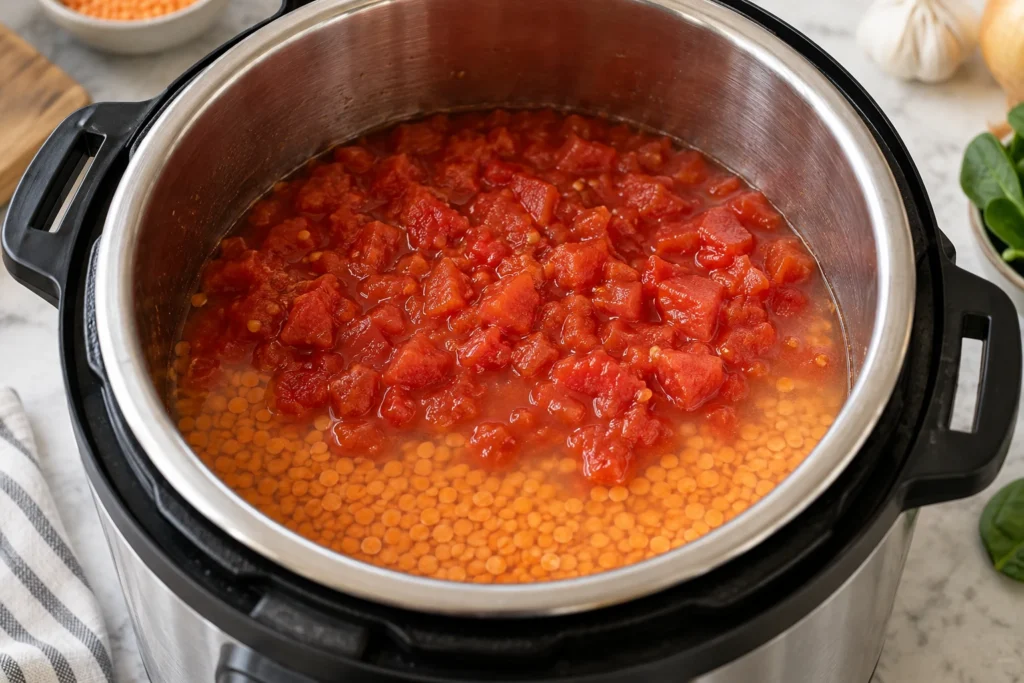
Secure lid, set valve to Sealing, and cook on High Pressure for 3 minutes. Let naturally release for 8 minutes, then vent any residual steam.
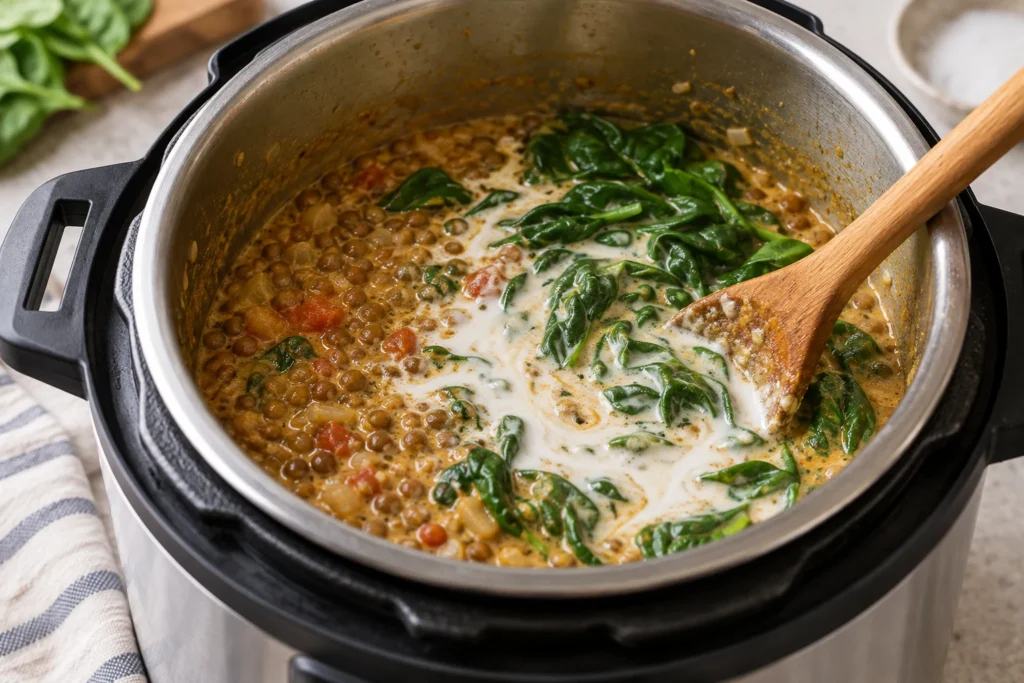
Open lid. Pour in 1 can of full-fat coconut milk and 1 teaspoon of kosher salt. Turn on Sauté Low for 2 to 3 minutes, stirring gently until hot and steaming (do not allow it to boil vigorously).
Press Cancel. Add baby spinach by the handful, stirring gently until wilted and vibrant green. Stir in 1 tablespoon of fresh lime juice and season with additional salt to taste.
Troubleshooting Common Pitfalls
Preventing Coconut Milk Curdling
Never subject coconut milk to high pressure or a rapid rolling boil. Always stir it in after the lid is opened, heating it gently on Sauté Low just until warm.
Correcting an Overly Sweet or Rich Curry
If your curry tastes too sweet from the coconut milk and lentils, add extra lime juice 1/2 teaspoon at a time along with a pinch of kosher salt and cayenne pepper to re-balance the palate.
Reviving Chilled Leftovers
Because coconut oil solidifies at cooler temperatures, chilled curry will appear thick and paste-like. Simply warm it over low stovetop heat with 2 to 4 tablespoons of water, stirring until creamy.
Substitutions & Adjustments
Light Coconut Milk: Light canned coconut milk can be substituted to reduce fat content, though the finished curry will be somewhat thinner in body.
Frozen Chopped Spinach: If using frozen spinach, thaw 1 cup thoroughly, squeeze out excess water in a clean kitchen towel, and stir it in along with the coconut milk.
Brown Lentils Caution: Do not swap brown or green lentils directly into this 3-minute cycle; their intact seed coats require at least 12-15 minutes under pressure.
Safe Storage & Reheating
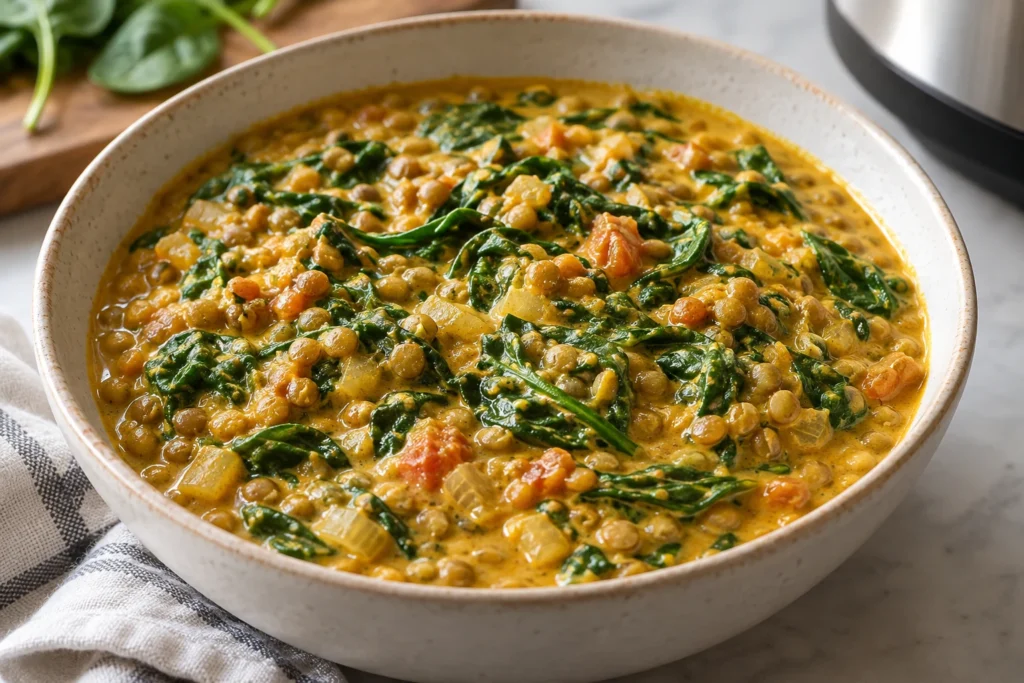
Transfer the curry into shallow glass storage containers within 2 hours of cooking. Keep refrigerated for up to 4 days. Because coconut fats firm up when cold, reheat gently in a covered saucepan over medium-low heat with a splash of water, or microwave in 45-second intervals, stirring between bursts until steaming throughout (165°F). Avoid boiling vigorously to prevent separation.
Serving Suggestions
Serve with warm garlic naan or basmati rice. Pairs wonderfully alongside our 15-Minute Creamy Coconut Chickpea Curry or 15-Minute Creamy Spinach Paneer with Frozen Spinach.
Recipe Card
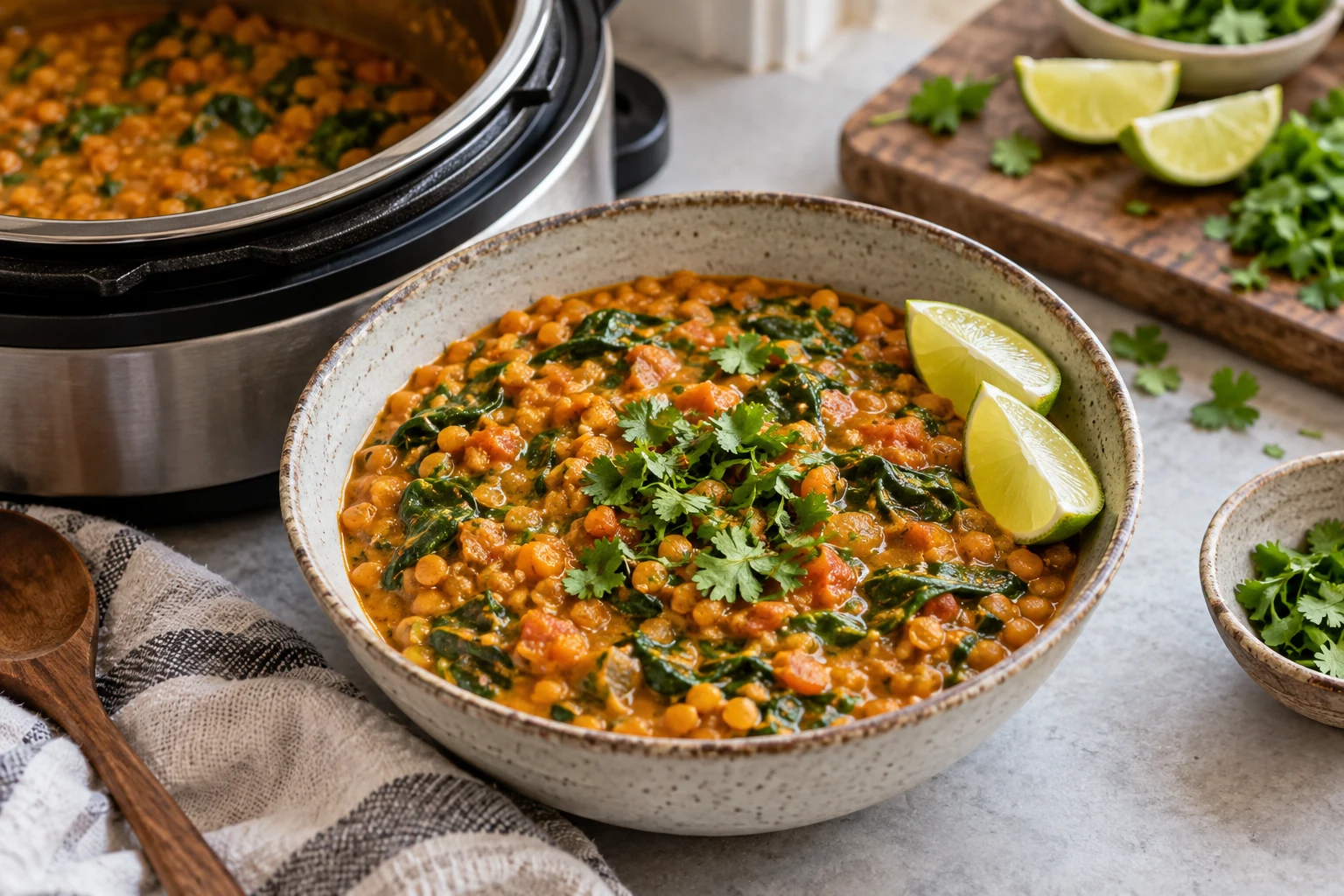
Instant Pot Creamy Coconut Lentil & Spinach Curry
Ingredients
Method
- Turn Instant Pot to Sauté mode. Warm oil and cook onion 3 minutes until translucent. Add ginger, garlic, curry powder, and turmeric; sauté 30 seconds.
- Press Cancel. Add 1/2 cup water and scrape the pot base with a wooden spatula to remove all browned bits.
- Add red lentils and remaining 2 1/2 cups water. Spoon diced tomatoes on top without stirring.
- Lock lid, seal valve, and cook on High Pressure for 3 minutes. Natural release 8 minutes, then quick release remaining steam.
- Open lid. Stir in full-fat coconut milk and salt. Select Sauté Low and warm 2 to 3 minutes until hot, without boiling.
- Press Cancel. Fold in baby spinach in handfuls until wilted and bright green. Stir in lime juice and serve with cilantro.
Notes
Developed using culinary research and US grocery pantry adaptations. Learn more about how we develop recipes.
Frequently Asked Questions
Why isn't coconut milk cooked under pressure?
Pressure-cooking coconut milk often splits the emulsion, leaves an oily film on top, and dramatically increases the likelihood of an Instant Pot Burn error.
Can I add chickpeas to this curry?
Yes. A drained 15-ounce can of chickpeas can be folded in alongside the coconut milk after pressure release to add extra chew and protein.
Is this recipe gluten-free?
Yes, as long as your store-bought curry powder does not contain wheat flour as an anti-caking agent, this entire recipe is naturally gluten-free and vegan.
Keep Cooking